Choosing Your Integration
Compare Card API, APM API, and Hosted Payment Page to find the right fit
Choosing Your Integration
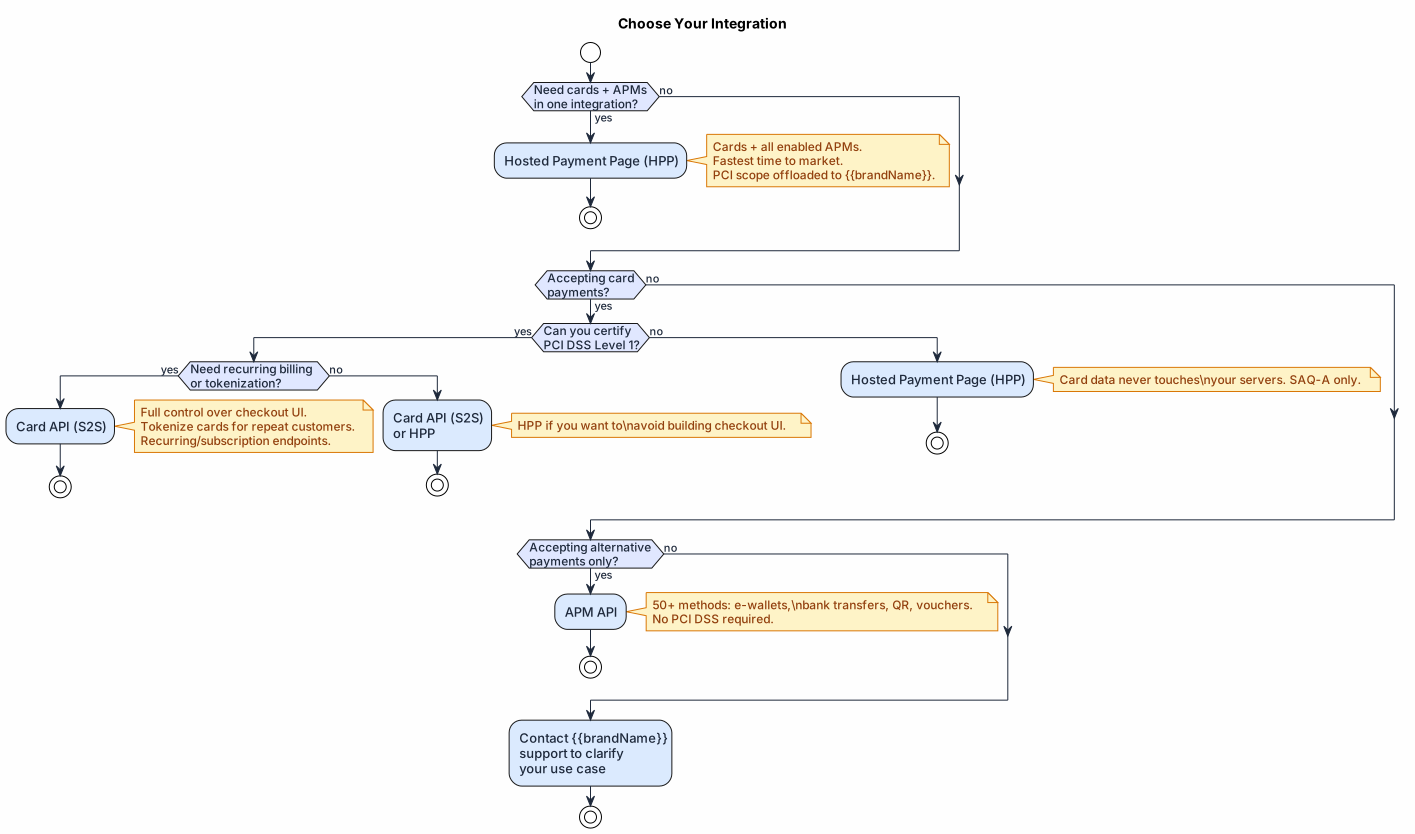
Exirom offers three integration methods. Each trades off control, compliance burden, and time to integrate.
| Integration | Description |
|---|---|
| Card API (S2S) | Server-to-server integration for card payments. You build the checkout UI and handle raw card data. |
| APM API | Server-to-server integration for 50+ alternative payment methods (e-wallets, bank transfers, QR, vouchers). |
| Hosted Payment Page (HPP) | Exirom-hosted checkout page that supports cards and all enabled APMs with minimal integration effort. |
#Comparison
| Feature | Card API (S2S) | APM API | Hosted Payment Page (HPP) |
|---|---|---|---|
| PCI DSS Required | Yes (Level 1 SAQ-D) | No | No |
| Card data on your server | Yes | No | No |
| Payment methods | Cards only | 50+ APMs (e-wallets, bank transfers, QR, vouchers) | Cards + all enabled APMs |
| 3D Secure handling | You implement redirect/iframe | N/A | Handled by Exirom |
| UI Control | Full (your checkout) | Full (your checkout, redirect/QR per method) | Limited (Exirom-hosted page) |
| Customization | Complete | Complete | Domain URL + enabled payment methods only (for full branding use Cashier SDK — separate docs) |
| Tokenization & Recurring | Yes | No | No |
| Time to integrate | Days | Hours | Minutes |
| Complexity | High | Medium | Low |
#PCI DSS Compliance
This section is critical. Read it before choosing an integration.
The Card API is a server-to-server integration where raw card data (PAN, CVV) passes through your servers. This requires PCI DSS Level 1 compliance — the most stringent level. Certification is expensive, time-consuming, and requires annual audits.
If you cannot prove PCI DSS compliance, you cannot use the Card S2S API. Use HPP instead — card data never touches your servers.
APM payments do not involve card data, so no PCI certification is needed regardless of integration method.
#Decision Tree
#What's Next
Choose your path and follow the quick-start guide:
- Card API — Quick Start: Card Payment
- APM API — Quick Start: APM Payment
- HPP — Quick Start: Hosted Payment Page